Connectedness-3-6-9-organised energy field-morfogenetic resonance

Your breakdown captures the essence of the reflections on the intersection of quantum mechanics and relativity, highlighting the pivotal role of the observer and proposing the concept of the “observing organized energy field” as a potential solution. Here’s a summary of the key points:

Incompatibility of Quantum Mechanics and Relativity: Despite their individual success, combining quantum mechanics and relativity leads to paradoxes and challenges, creating a crisis in physics.

Role of the Observer: Both quantum mechanics and relativity emphasize the significance of the observer, impacting phenomena such as the measurement problem, wave-particle duality, and quantum entanglement.

Space-Time Continuum and the Moment of Now: The observer experiences space and time as relative and dynamic, with the “moment of Now” serving as a convergence point where the micro and macro worlds integrate.

Resolution in the Moment of Now: The “moment of Now” offers a potential resolution to the quantum measurement problem and uncertainty, providing a platform for understanding complex phenomena like quantum entanglement.

Universal Spiritual Field: The concept of the observing organized energy field introduces an additional layer within reality, carrying historical essence and catalyzing significant events like the Big Bang.

Interconnectedness and Mystical Insights: Echoing mystical beliefs, the notion of everything being interconnected through the observing organized energy field suggests a broader perspective beyond conventional scientific frameworks.

Call for New Frontiers: There’s an advocacy for transcending traditional thinking and embracing novel approaches to understanding the universe, inviting exploration into new frontiers of human understanding.

Overall, your perspective offers a compelling exploration of reality’s nature and the potential pathways to expand our comprehension beyond existing scientific boundaries.

Read more
3-6-9 ratios;Higgs boson/standard model/time tables/natural constants

Intriguing Relations Between Time, Quarks, and the Big Bang

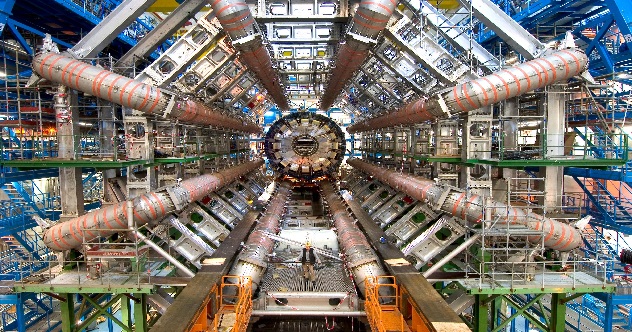
The micro and macro scales of the universe exhibit intriguing parallels, particularly evident in the mass distributions and numerical relationships at the atomic level. On a micro scale, atomic mass comprises only 1% of the universe’s total energy and matter, yet it reveals significant mass disparities among elementary particles like quarks and leptons.

Quarks and leptons are organized in pairs (up-down, charm-strange, top-bottom for quarks), with each pair showing large mass differences. This pattern of six quarks and six leptons (each with their corresponding antiparticle) mirrors the structure of time, divided into units like hours and quarters.

The proportions of 1/12 and 1/6, seen in both the particle groupings and time divisions, highlight a fascinating numerical symmetry. Additionally, the mass proportions of 99% to 1% at both the macro and micro levels reflect a mirror symmetry within the universe’s matter and energy distribution.

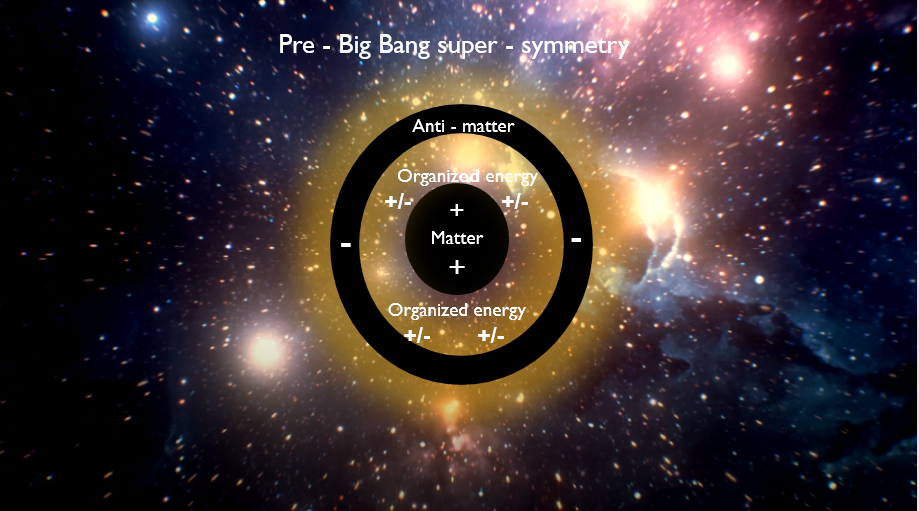
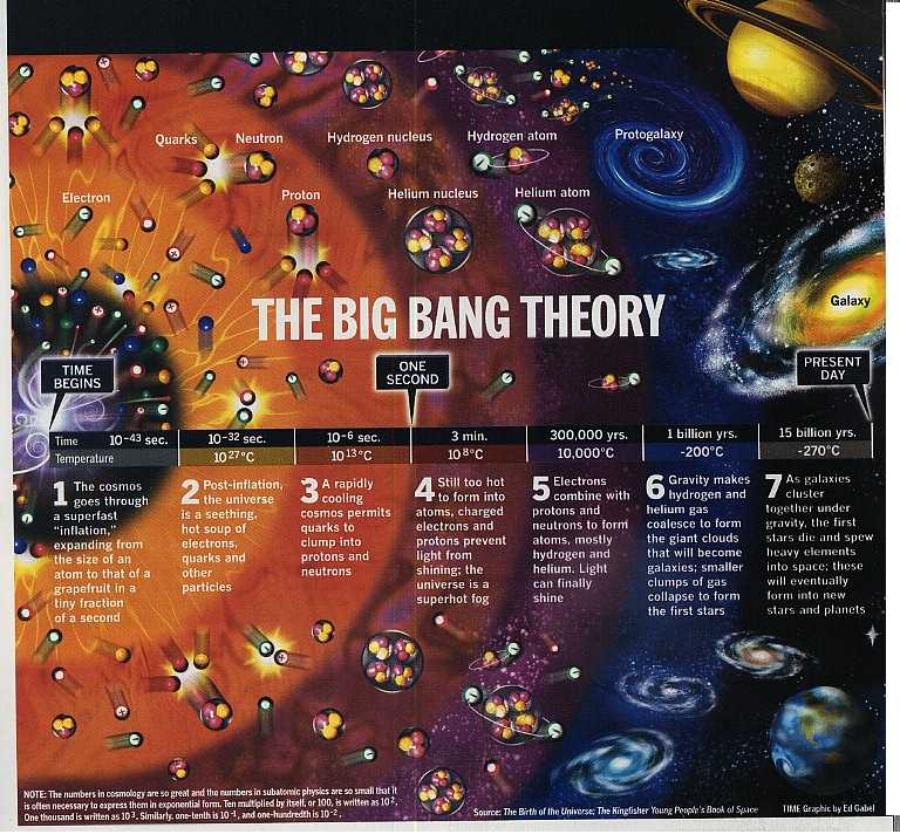
Quarks have characteristic spin values of 2/3 and -1/3, which can be traced back to pre-Big Bang supersymmetry, a period defined by a 360-degree circle of matter, anti-matter, and spirit, each comprising one-third. After the Big Bang, six fundamental forces emerged: gravity, electromagnetic force, weak nuclear force, strong nuclear force, anti-gravity, and the cosmological constant.

This cosmic symmetry is also reflected in numerical patterns, such as those found in vortex mathematics and Tesla’s 3-6-9 theory. The 360-degree circle, 180-degree diameter, and 90-degree radius all reduce to 9, illustrating a recurring numerical theme.

The pre-Big Bang symmetry and its aftermath suggest a deep connection between these forces and the numerical constants in nature. This symmetry also extends to time measurement and the speed of light (C2), emphasizing the interconnectedness of cosmic components.

Organic conscious life, which developed on Earth with its 24-hour days, reflects these numerical proportions, mirroring the standard model of matter with its six types of quarks and six types of leptons. This synchronicity highlights the profound connection between the universe’s fundamental structures and the nature of time and existence.

Read more